
Theatre Green Book PRODUCTIONS Toolkit – Designing and Making
End of Life Disposal
According to the guidelines of the Theatre Green Book, your first thought should be ‘Can I do without it?’ but if you are certain you do want and need an item you should then consider steps to reduce the amount you are likely to have to get rid of at the end of a production, and then consider whether you can repurpose them for your future productions, put into storage for future use, or give to another company.
Planning ahead
Remember to bear in mind how you will dispose of items throughout the whole design and build process. The aim is to move to a circular model of production, where everything stays in use in its original format for as long as possible.
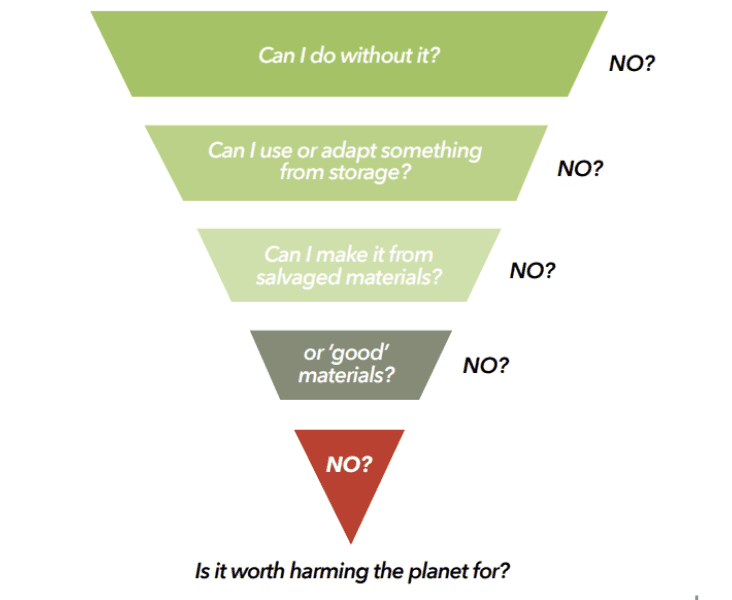
There are many strategies you can follow to reduce the burden of disposal at end of life, some of which are covered in other toolkit sections of the Theatre Green Book. For example, can an item be designed to modular principles, so that only some elements of the item are disposed whilst others are retained for stock? Can you follow design for disassembly guidance to enhance the ability of your items to be disassembled into their constituent materials at end of life? Materials which you have bonded together with glues, for example, or covered with paints and texture, will have reduced value in the recycling chain and may no longer be recyclable. It’s therefore vital to plan your build process so that items are built for disassembly.
Disposal
If you have done everything you can to achieve the above, but still have some items to dispose of, you can still consider how to do this as responsibly as possible, ensuring items are recycled rather than sent to landfill or incineration.
- Do you know where your waste goes, both recycling and non-recycling? Most councils have information about where waste goes and how it is sorted or disposed of. Some waste companies will be happy to speak to you about where your waste goes and some will even offer tours of their waste facilities. Consider sharing this information with your staff and co-producers so you can make informed decisions.
- Remember that single, untreated materials are much easier for sites to recycle. If you have wood that is treated, painted or has glue/wallpaper paste on, it becomes much harder to recycle. Ask your teams to dismantle materials as much as possible before recycling.
- If you have a lot of costumes, can you contact a costume hire place to see if they want to take them?
- Can you contact other local theatre companies/am dram groups/schools to see if they might want the costumes for their stores. If you are sending anything to storage, can you ensure or recommend that items are stored well, as if they get damp or damaged they may end up being thrown away anyway.
- Can you contact commercial prop makers to see if they want any specialist items you might have?
- Consider the mileage that disposal might have: are you having to drive across the country to get to a recycling point?
- Can you donate to a props salvage or scrap store, either for wood/building materials or costume fabrics. Search your local area for places such as this one.
- If you have equipment, you could consider donating to Twam who take donations of power tools and sewing machines etc.
- Schools will often take set, costume and prop items.
- Local amateur dramatic groups may also be interested in donations.
- For difficult-to-recycle items, look for specialists such as for recycling polythene.
- There are also theatre set companies who will recycle or reuse your items: